Roof ventilation helps remove trapped heat, stale air and excess moisture from homes, offices, warehouses, factories and other buildings. This Cape Town roof ventilation guide explains how whirlybirds, turbine roof ventilators and SupaVent systems work, where they can be used, and how professional installation can improve natural airflow through a building.
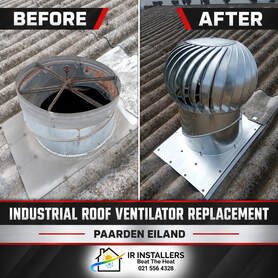
Same-Day Industrial Roof Ventilator Replacement in Paarden Eiland
A damaged or missing industrial roof ventilator can quickly affect the airflow inside a factory, warehouse or workshop. It also leaves the roof opening exposed to rain, wind and debris.
IR Installers recently attended to an industrial roof ventilator in Paarden Eiland after the turbine section had blown off the roof. The old ventilator base was still in position, but the rotating head was completely missing.
The damaged unit was replaced on the same day with a new industrial roof ventilator, restoring the building’s natural roof ventilation and properly covering the existing roof opening.
Why fast industrial roof-ventilator replacement mattersIndustrial roof ventilators help remove trapped heat and stale air from large commercial buildings. When a ventilator is damaged, seized or blown off, ventilation performance may be reduced immediately.
Prompt replacement can help:
Can an industrial whirlybird be replaced on the same day?
In many cases, IR Installers can complete an industrial whirlybird replacement on the same day as the assessment. This depends on the required ventilator size, available stock, roof access, weather conditions and the condition of the existing base and flashing.
Our team first inspects the damaged roof ventilator and surrounding roofing. We then determine whether only the turbine head can be replaced or whether the complete industrial roof ventilator, base and flashing require attention.
Signs that an industrial roof ventilator needs replacingArrange an inspection if your roof ventilator:
Industrial roof-ventilator installations in Cape TownIR Installers supplies, replaces and installs industrial roof ventilators for warehouses, factories, workshops and commercial premises in Paarden Eiland and surrounding Cape Town industrial areas.
We assess the existing installation, recommend the appropriate replacement and ensure the new ventilator is securely fitted to the roof.
For more information about our systems, visit our roof ventilators in Cape Town page or explore the IR Installers website.
Contact IR InstallersDo you have a damaged, noisy or missing industrial whirlybird?
Contact IR Installers for an assessment and the fastest available replacement service.
Telephone: 021 556 4328
WhatsApp: 082 513 1022
Email: sales@twirlybird.co.za
Same-day industrial roof-ventilator replacement is subject to stock availability, safe roof access and suitable weather conditions.
SEO keywordsIndustrial roof ventilator replacement, same-day whirlybird replacement, industrial whirlybird Cape Town, industrial roof ventilation Cape Town, warehouse roof ventilators, factory roof ventilation, commercial roof ventilator installation, Paarden Eiland roof ventilation, damaged whirlybird replacement, industrial ventilation installers, IR Installers Cape Town.
A damaged or missing industrial roof ventilator can quickly affect the airflow inside a factory, warehouse or workshop. It also leaves the roof opening exposed to rain, wind and debris.
IR Installers recently attended to an industrial roof ventilator in Paarden Eiland after the turbine section had blown off the roof. The old ventilator base was still in position, but the rotating head was completely missing.
The damaged unit was replaced on the same day with a new industrial roof ventilator, restoring the building’s natural roof ventilation and properly covering the existing roof opening.
Why fast industrial roof-ventilator replacement mattersIndustrial roof ventilators help remove trapped heat and stale air from large commercial buildings. When a ventilator is damaged, seized or blown off, ventilation performance may be reduced immediately.
Prompt replacement can help:
- Restore airflow through the roof space.
- Remove trapped heat from factories and warehouses.
- Reduce stagnant air inside industrial buildings.
- Protect the existing roof opening from rain and debris.
- Prevent further deterioration of the ventilator base and flashing.
- Reduce disruption to normal business operations.
Can an industrial whirlybird be replaced on the same day?
In many cases, IR Installers can complete an industrial whirlybird replacement on the same day as the assessment. This depends on the required ventilator size, available stock, roof access, weather conditions and the condition of the existing base and flashing.
Our team first inspects the damaged roof ventilator and surrounding roofing. We then determine whether only the turbine head can be replaced or whether the complete industrial roof ventilator, base and flashing require attention.
Signs that an industrial roof ventilator needs replacingArrange an inspection if your roof ventilator:
- Has blown off or is visibly damaged.
- No longer turns in the wind.
- Makes excessive noise while rotating.
- Is rusted, bent or unstable.
- Allows water to enter around the base.
- Has damaged or loose roof flashing.
- Is no longer extracting heat effectively.
Industrial roof-ventilator installations in Cape TownIR Installers supplies, replaces and installs industrial roof ventilators for warehouses, factories, workshops and commercial premises in Paarden Eiland and surrounding Cape Town industrial areas.
We assess the existing installation, recommend the appropriate replacement and ensure the new ventilator is securely fitted to the roof.
For more information about our systems, visit our roof ventilators in Cape Town page or explore the IR Installers website.
Contact IR InstallersDo you have a damaged, noisy or missing industrial whirlybird?
Contact IR Installers for an assessment and the fastest available replacement service.
Telephone: 021 556 4328
WhatsApp: 082 513 1022
Email: sales@twirlybird.co.za
Same-day industrial roof-ventilator replacement is subject to stock availability, safe roof access and suitable weather conditions.
SEO keywordsIndustrial roof ventilator replacement, same-day whirlybird replacement, industrial whirlybird Cape Town, industrial roof ventilation Cape Town, warehouse roof ventilators, factory roof ventilation, commercial roof ventilator installation, Paarden Eiland roof ventilation, damaged whirlybird replacement, industrial ventilation installers, IR Installers Cape Town.
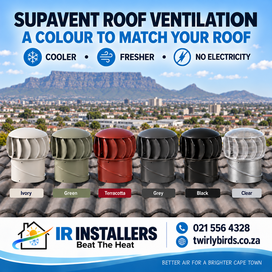
SupaVent Roof Ventilation in Cape Town:
A Colour to Match Your Roof
Cape Town homes can become extremely hot during summer, especially when heat becomes trapped inside the roof space. Excess moisture can also contribute to condensation, stale air and mould-related problems.
A professionally installed SupaVent roof ventilator provides a simple, energy-efficient way to improve airflow through your roof space.
What Is a SupaVent?
A SupaVent is a wind-powered roof ventilator designed to draw hot and moisture-laden air out of the roof space. Because it operates using natural wind movement, it does not require electricity.
As warm air escapes through the ventilator, replacement air can enter through the roof’s existing ventilation openings. This continuous airflow can help reduce heat build-up and create a fresher roof environment.
Choose a Colour That Complements Your Roof
Roof ventilation does not have to spoil the appearance of your property. SupaVents are available in a wide selection of colours suitable for many popular roof finishes.
Colour options include lighter shades, greens, reds, greys, blues and dark charcoal finishes. IR Installers can help you select a colour that blends neatly with your existing tiled or metal roof.
Product colours and availability should always be confirmed when requesting your quotation.
Benefits of SupaVent Roof Ventilation
A SupaVent installation can:
Correct positioning and installation are essential for effective roof ventilation and preventing roof leaks.
IR Installers has more than 15 years of installation experience. We install roof ventilation systems for homes, offices, workshops, warehouses and other buildings throughout Cape Town.
Contact IR Installers for a free, obligation-free SupaVent installation quotation.
Call: 021 556 4328
Visit: www.twirlybirds.co.za
IR Installers – Better airflow for Cape Town homes and businesses.
A Colour to Match Your Roof
Cape Town homes can become extremely hot during summer, especially when heat becomes trapped inside the roof space. Excess moisture can also contribute to condensation, stale air and mould-related problems.
A professionally installed SupaVent roof ventilator provides a simple, energy-efficient way to improve airflow through your roof space.
What Is a SupaVent?
A SupaVent is a wind-powered roof ventilator designed to draw hot and moisture-laden air out of the roof space. Because it operates using natural wind movement, it does not require electricity.
As warm air escapes through the ventilator, replacement air can enter through the roof’s existing ventilation openings. This continuous airflow can help reduce heat build-up and create a fresher roof environment.
Choose a Colour That Complements Your Roof
Roof ventilation does not have to spoil the appearance of your property. SupaVents are available in a wide selection of colours suitable for many popular roof finishes.
Colour options include lighter shades, greens, reds, greys, blues and dark charcoal finishes. IR Installers can help you select a colour that blends neatly with your existing tiled or metal roof.
Product colours and availability should always be confirmed when requesting your quotation.
Benefits of SupaVent Roof Ventilation
A SupaVent installation can:
- Help remove trapped heat from the roof space
- Improve natural airflow
- Help reduce moisture and condensation
- Operate without electricity
- Provide year-round roof ventilation
- Suit tiled and metal roofs
- Blend with different roof colours
- Provide a neat, attractive alternative to traditional metal turbines
Correct positioning and installation are essential for effective roof ventilation and preventing roof leaks.
IR Installers has more than 15 years of installation experience. We install roof ventilation systems for homes, offices, workshops, warehouses and other buildings throughout Cape Town.
Contact IR Installers for a free, obligation-free SupaVent installation quotation.
Call: 021 556 4328
Visit: www.twirlybirds.co.za
IR Installers – Better airflow for Cape Town homes and businesses.
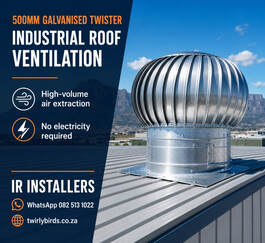
Improve Industrial Ventilation with a 500mm Galvanised Twister
Large factories, warehouses and workshops can quickly become uncomfortably hot when heat, fumes, steam and stale air accumulate beneath the roof. The 500mm Galvanised Twister provides an effective, wind-driven industrial roof-ventilation solution without requiring electricity.
What Is a 500mm Galvanised Twister?
The 500mm Galvanised Twister is a large industrial turbine roof ventilator designed for bigger buildings and higher roofs. Wind causes the turbine head to rotate, while naturally rising hot air also assists the extraction process.
As hot and stale air is removed through the roof, fresh replacement air can enter the building through existing doors, windows, louvres or purpose-designed air inlets.
Where Can It Be Used?
The 500mm Galvanised Twister is suitable for:
A professionally installed 500mm Twister can help:
Professional Installation Is Important
The number and positioning of roof ventilators should be based on the building’s size, roof height, heat load, airflow and intended use. Correct flashing and waterproofing are also essential for a safe, weather-resistant installation.
IR Installers can assess your premises and recommend a suitable industrial roof-ventilation solution.
Contact IR Installers for the supply and professional installation of 500mm Galvanised Twister roof ventilators in Cape Town.
WhatsApp: 082 513 1022
Email: sales@twirlybirds.co.za
Website: www.twirlybirds.co.za
Large factories, warehouses and workshops can quickly become uncomfortably hot when heat, fumes, steam and stale air accumulate beneath the roof. The 500mm Galvanised Twister provides an effective, wind-driven industrial roof-ventilation solution without requiring electricity.
What Is a 500mm Galvanised Twister?
The 500mm Galvanised Twister is a large industrial turbine roof ventilator designed for bigger buildings and higher roofs. Wind causes the turbine head to rotate, while naturally rising hot air also assists the extraction process.
As hot and stale air is removed through the roof, fresh replacement air can enter the building through existing doors, windows, louvres or purpose-designed air inlets.
Where Can It Be Used?
The 500mm Galvanised Twister is suitable for:
- Factories and manufacturing facilities
- Warehouses and storage buildings
- Workshops and engineering premises
- Agricultural buildings
- Commercial buildings
- Assembly halls
- Larger industrial roof spaces
A professionally installed 500mm Twister can help:
- Extract trapped heat from below the roof
- Remove stale and humid air
- Reduce the accumulation of certain fumes, steam and odours
- Improve natural airflow
- Create a more comfortable working environment
- Protect stored products from excessive heat and moisture
- Reduce reliance on electrically powered ventilation
Professional Installation Is Important
The number and positioning of roof ventilators should be based on the building’s size, roof height, heat load, airflow and intended use. Correct flashing and waterproofing are also essential for a safe, weather-resistant installation.
IR Installers can assess your premises and recommend a suitable industrial roof-ventilation solution.
Contact IR Installers for the supply and professional installation of 500mm Galvanised Twister roof ventilators in Cape Town.
WhatsApp: 082 513 1022
Email: sales@twirlybirds.co.za
Website: www.twirlybirds.co.za
SupaVent installation Cape Town properties can rely onWhirlybird Roof Ventilation: Uses, Benefits and Installation
A hot, poorly ventilated roof can trap warm and stale air above a home or workplace. A damp roof cavity or closed container can also hold excess moisture and develop condensation. Correctly planned whirlybird roof ventilation gives that trapped air a natural escape route.
At IR Installers, we supply and install wind-powered roof vents for residential, commercial and light-industrial properties across Cape Town and the Western Cape. These roof vents are commonly called whirlybirds, twirlybirds, turbine roof ventilators, Tornadoes or SupaVents. Whatever name is used, the purpose is similar: improve airflow by allowing rising hot air and excess moisture to leave through the roof.
This guide explains what a whirlybird is used for, where it can be installed, which buildings benefit most and why professional sizing and placement matter.
What is a whirlybird and how does it work?
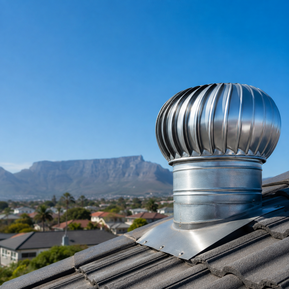
A whirlybird is a rotating roof-mounted turbine ventilator. Wind turns the turbine head and helps draw air out through the roof. Even when the wind is light, warm air naturally rises, allowing the unit to support natural roof ventilation through convection. This combination makes whirlybirds a practical form of wind-driven roof ventilation.
Because standard units do not require an electric motor, they are widely used for electricity-free roof ventilation. This makes them a practical choice for general ventilation without electricity. They do not replace an air conditioner, but they can help remove trapped hot air from a roof cavity before that heat continues radiating into the rooms below. For this reason, energy-efficient roof ventilation is often used alongside insulation, eave vents, ceiling insulation and, where necessary, air conditioning.
South Africa’s National Building Regulations describe natural ventilation as air movement caused by natural forces. The City of Cape Town’s building guidance also stresses that houses, commercial buildings and warehouses need appropriate ventilation systems. Correct performance, however, depends on the complete airflow path: stale air must have an outlet and replacement air must be able to enter.
What are whirlybirds used for?
Whirlybirds are used for roof heat extraction, hot roof space ventilation, excess-moisture control and general air movement. They are suitable for many permanent and temporary structures, provided the roof, building use, intake-air supply and number of ventilators have been properly assessed.
1. Whirlybirds for homes
Whirlybirds for homes are normally fitted above a ceiling cavity, loft or attic. During hot Cape Town weather, house roof ventilation can release accumulated heat from the roof space. Residential roof ventilation may help reduce heat inside roof cavities and improve conditions below, especially when the roof also has suitable intake vents and insulation.
Loft and attic ventilation is also valuable where warm, moisture-laden household air reaches the roof cavity. A professionally planned system can assist with roof moisture control, help reduce roof condensation and reduce mould risk in roof spaces. This is particularly relevant when choosing ventilation for coastal humidity in Cape Town’s damp or salt-laden coastal environment.
Depending on the roof covering, an installer may recommend a whirlybird for tiled roof applications, a whirlybird for metal roof applications or a flashing system designed for another roof profile. The objective is reliable airflow without compromising the roof’s weatherproofing.
2. Offices, shops and schools
Office roof ventilation can remove accumulated warm air above ceilings and help reduce the strain placed on comfort-cooling systems. Shop roof ventilation is useful in retail spaces, stock rooms and other buildings where heat can gather beneath a large roof. School roof ventilation can support natural airflow in classrooms, halls, storerooms and administration buildings when incorporated into a properly planned ventilation design.
Commercial roof ventilation must account for building size, occupancy, internal heat sources and existing mechanical systems. A whirlybird is a general ventilator; it is not a substitute for a legally required smoke-extraction, hazardous-fume or commercial-kitchen exhaust system.
3. Factories, warehouses and workshops
Large metal roofs can hold substantial heat. Industrial roof ventilation and factory roof ventilation use strategically positioned outlets to release rising air. Turbine ventilators for factories may form part of a broader factory heat ventilation plan that also includes low-level intake points and other mechanical or passive measures.
Warehouse roof ventilation and warehouse heat extraction can be especially useful above packing, storage and dispatch areas. Workshop roof ventilation may improve general air movement where tools, vehicles, machinery and people contribute heat. However, specialised extraction is still required for welding fumes, paint vapour, combustion gases, chemical fumes or airborne contaminants.
For buildings with corrugated steel roofs, a correctly flashed IBR roof ventilation installation is essential. The turbine size, roof position, available intake air and expected wind exposure should all be considered before a roof turbine installation begins.
4. Garages, garden sheds and agricultural buildings
Garage roof ventilation can help release heat and stale air from an enclosed garage, while garden shed ventilation may reduce the hot, stuffy conditions that can affect tools and stored belongings. A whirlybird can also be used for agricultural building ventilation, including barn and farm shed ventilation, where general heat and moisture need an escape route.
These spaces often need secure, weather-resistant intake vents as well as a roof outlet. Without incoming replacement air, even a well-made turbine cannot perform to its full potential.
5. Shipping containers, site offices and storage units
Shipping container ventilation is one of the most practical uses for turbine roof ventilators. Steel containers absorb solar heat and can become extremely hot when closed. They may also develop condensation when warm air meets cooler metal surfaces. The same airflow principles apply to storage unit ventilation where heat and moisture accumulate.
A whirlybird for shipping container use can assist with shipping container heat reduction by allowing rising hot air to escape. Container roof ventilation can also help reduce condensation in shipping container spaces when it is paired with correctly placed intake vents and, where appropriate, insulation or a vapour-control system.
The same principle applies to office container ventilation, site office ventilation, storage container ventilation and ventilation for container homes. A roof ventilator for storage containers may protect the storage environment from stagnant heat and moisture, but sensitive goods may still require controlled temperature and humidity.
IR Installers can assess home container ventilation, commercial container offices and storage installations to identify a suitable ventilator position and weatherproof flashing method.
Which ventilation problems can a whirlybird help solve?
Reducing accumulated roof heat. Warm air rises and collects at the highest part of a building. A roof turbine provides a high-level outlet to remove hot air from building interiors or roof cavities. Property owners who want to reduce heat in roof space areas should also consider insulation, shading and low-level intake air. Although the exact temperature improvement depends on the property, natural heat extraction can reduce the volume of trapped air sitting under the roof and improve airflow inside building spaces.
Summer roof ventilation Cape Town property owners can plan for
For Cape Town properties, summer roof ventilation can be part of a wider heat-management plan incorporating shading, reflective roof finishes, insulation and efficient cooling. Whirlybirds do not create refrigerated air, but they can help reduce one important source of unwanted heat.
Managing moisture, humidity and condensation
When moist air remains trapped against cold roof surfaces, condensation may form. Roof condensation prevention requires control of both airflow and moisture sources. A turbine ventilator can help release humid air, but leaks, unvented appliances and persistent water entry must also be corrected.
Excess moisture ventilation can support humidity control ventilation and reduce conditions that encourage mould and mildew. The most accurate claim is mould and mildew risk reduction—not a guaranteed cure. Existing mould, damp insulation, roof leaks and structural moisture should be assessed separately.
Removing stale air and ordinary odours
Stale air ventilation and ordinary odour ventilation can improve enclosed garages, sheds, workshops, stores and containers. The system should not be used as the sole extraction method for toxic gases, smoke, fuel vapour, grease-laden kitchen air or hazardous chemicals.
Improving airflow without ongoing electricity use
Wind-powered roof vents operate without a standard electric motor. This makes them an attractive natural ventilation option where owners want continuous roof-level airflow without adding another electrically powered appliance. CSIR research into natural ventilation systems identifies turbine ventilators as one example of natural ventilation and notes that building layout, openings, wind direction and other design variables affect performance.
Whirlybird Installation for Cape Town Roof Types
Professional whirlybird installation in Cape Town should begin with a roof and airflow assessment. IR Installers works with tiled, IBR, corrugated and other metal-roof profiles. Each needs an appropriate flashing and waterproofing method.
How many whirlybirds does a building need?
There is no reliable one-size-fits-all number. A small garage, a tiled house, a shipping container and a large warehouse have very different volumes and heat loads. The correct quantity depends on:
Whirlybird, extractor fan or air conditioner?
These products solve different problems:
SupaVent Installation for Cape Town Properties
SupaVent roof ventilators are another option for residential, commercial and industrial applications. The best model depends on the roof, space and ventilation objective. A SupaVent installation in Cape Town should be sized and positioned with the same care as any other roof ventilator, including proper intake air and weatherproof sealing.
IR Installers can advise whether a standard whirlybird, SupaVent, Tornado or another roof ventilation product is most suitable for the property.
Whirlybird maintenance and repairs
Quality turbine ventilators generally need limited maintenance, but they should still be inspected periodically—especially after severe weather or when noise, resistance, visible damage or water entry is noticed. Checks can include the turbine’s rotation, fasteners, flashing, sealants, corrosion, debris and nearby roof condition.
A noisy unit does not always need replacement. The cause may be debris, storm damage, a loose component or wear. Have the installation assessed rather than applying an unsuitable lubricant or climbing onto the roof without the correct safety equipment.
Frequently asked questions about whirlybirds
How do whirlybirds work?
Wind rotates the turbine while rising warm air moves toward the roof outlet. Together, these natural forces help extract air from the roof cavity or enclosed space.
Do whirlybirds work without electricity?
Yes. Standard wind-powered whirlybirds do not need an electric motor. Their performance varies with wind, temperature difference, unit size, intake-air availability and installation design.
What is a whirlybird used for?
Common uses include residential roof ventilation, commercial building ventilation, industrial roof ventilation, garage and shed ventilation, warehouse ventilation and shipping-container ventilation.
Do whirlybirds reduce heat?
They can help release trapped hot air from a roof space or enclosed structure. They do not produce cold air and should not be marketed as a complete replacement for insulation or air conditioning.
Can whirlybirds reduce condensation?
Improved airflow can help remove humid air and reduce condensation risk. Moisture sources, leaks, insulation and vapour control must also be considered.
How many whirlybirds does a house need?
The answer depends on roof area, roof design, turbine capacity, insulation and intake ventilation. A site-specific recommendation is more reliable than a generic rule.
Where should a whirlybird be installed?
It is normally placed high on the roof where warm air gathers, but final positioning should consider wind exposure, intake vents, roof structure, flashing and the desired airflow path.
Can a whirlybird be installed on an IBR roof?
Yes. A suitable base and professional flashing are required to match the IBR profile and protect the roof against water entry
Can whirlybirds ventilate shipping containers?
Yes. A turbine with correctly placed intake vents can improve general airflow and help manage accumulated heat and condensation inside many storage, office and home containers
What is the difference between a whirlybird and an extractor fan?
A whirlybird relies on natural forces and provides general roof-level ventilation. A powered extractor fan provides mechanically controlled airflow and may be better for localised or regulated extraction requirements.
Do whirlybirds require maintenance?
They generally need little maintenance, but occasional inspection helps identify storm damage, loose fasteners, debris, corrosion, flashing problems or wear.
How much does whirlybird installation cost in Cape Town?
Pricing depends on the turbine model, quantity, roof type, roof height, access, flashing requirements and any intake vents needed. A quotation should be based on the actual property.
A hot, poorly ventilated roof can trap warm and stale air above a home or workplace. A damp roof cavity or closed container can also hold excess moisture and develop condensation. Correctly planned whirlybird roof ventilation gives that trapped air a natural escape route.
At IR Installers, we supply and install wind-powered roof vents for residential, commercial and light-industrial properties across Cape Town and the Western Cape. These roof vents are commonly called whirlybirds, twirlybirds, turbine roof ventilators, Tornadoes or SupaVents. Whatever name is used, the purpose is similar: improve airflow by allowing rising hot air and excess moisture to leave through the roof.
This guide explains what a whirlybird is used for, where it can be installed, which buildings benefit most and why professional sizing and placement matter.
What is a whirlybird and how does it work?
A whirlybird is a rotating roof-mounted turbine ventilator. Wind turns the turbine head and helps draw air out through the roof. Even when the wind is light, warm air naturally rises, allowing the unit to support natural roof ventilation through convection. This combination makes whirlybirds a practical form of wind-driven roof ventilation.
Because standard units do not require an electric motor, they are widely used for electricity-free roof ventilation. This makes them a practical choice for general ventilation without electricity. They do not replace an air conditioner, but they can help remove trapped hot air from a roof cavity before that heat continues radiating into the rooms below. For this reason, energy-efficient roof ventilation is often used alongside insulation, eave vents, ceiling insulation and, where necessary, air conditioning.
South Africa’s National Building Regulations describe natural ventilation as air movement caused by natural forces. The City of Cape Town’s building guidance also stresses that houses, commercial buildings and warehouses need appropriate ventilation systems. Correct performance, however, depends on the complete airflow path: stale air must have an outlet and replacement air must be able to enter.
What are whirlybirds used for?
Whirlybirds are used for roof heat extraction, hot roof space ventilation, excess-moisture control and general air movement. They are suitable for many permanent and temporary structures, provided the roof, building use, intake-air supply and number of ventilators have been properly assessed.
1. Whirlybirds for homes
Whirlybirds for homes are normally fitted above a ceiling cavity, loft or attic. During hot Cape Town weather, house roof ventilation can release accumulated heat from the roof space. Residential roof ventilation may help reduce heat inside roof cavities and improve conditions below, especially when the roof also has suitable intake vents and insulation.
Loft and attic ventilation is also valuable where warm, moisture-laden household air reaches the roof cavity. A professionally planned system can assist with roof moisture control, help reduce roof condensation and reduce mould risk in roof spaces. This is particularly relevant when choosing ventilation for coastal humidity in Cape Town’s damp or salt-laden coastal environment.
Depending on the roof covering, an installer may recommend a whirlybird for tiled roof applications, a whirlybird for metal roof applications or a flashing system designed for another roof profile. The objective is reliable airflow without compromising the roof’s weatherproofing.
2. Offices, shops and schools
Office roof ventilation can remove accumulated warm air above ceilings and help reduce the strain placed on comfort-cooling systems. Shop roof ventilation is useful in retail spaces, stock rooms and other buildings where heat can gather beneath a large roof. School roof ventilation can support natural airflow in classrooms, halls, storerooms and administration buildings when incorporated into a properly planned ventilation design.
Commercial roof ventilation must account for building size, occupancy, internal heat sources and existing mechanical systems. A whirlybird is a general ventilator; it is not a substitute for a legally required smoke-extraction, hazardous-fume or commercial-kitchen exhaust system.
3. Factories, warehouses and workshops
Large metal roofs can hold substantial heat. Industrial roof ventilation and factory roof ventilation use strategically positioned outlets to release rising air. Turbine ventilators for factories may form part of a broader factory heat ventilation plan that also includes low-level intake points and other mechanical or passive measures.
Warehouse roof ventilation and warehouse heat extraction can be especially useful above packing, storage and dispatch areas. Workshop roof ventilation may improve general air movement where tools, vehicles, machinery and people contribute heat. However, specialised extraction is still required for welding fumes, paint vapour, combustion gases, chemical fumes or airborne contaminants.
For buildings with corrugated steel roofs, a correctly flashed IBR roof ventilation installation is essential. The turbine size, roof position, available intake air and expected wind exposure should all be considered before a roof turbine installation begins.
4. Garages, garden sheds and agricultural buildings
Garage roof ventilation can help release heat and stale air from an enclosed garage, while garden shed ventilation may reduce the hot, stuffy conditions that can affect tools and stored belongings. A whirlybird can also be used for agricultural building ventilation, including barn and farm shed ventilation, where general heat and moisture need an escape route.
These spaces often need secure, weather-resistant intake vents as well as a roof outlet. Without incoming replacement air, even a well-made turbine cannot perform to its full potential.
5. Shipping containers, site offices and storage units
Shipping container ventilation is one of the most practical uses for turbine roof ventilators. Steel containers absorb solar heat and can become extremely hot when closed. They may also develop condensation when warm air meets cooler metal surfaces. The same airflow principles apply to storage unit ventilation where heat and moisture accumulate.
A whirlybird for shipping container use can assist with shipping container heat reduction by allowing rising hot air to escape. Container roof ventilation can also help reduce condensation in shipping container spaces when it is paired with correctly placed intake vents and, where appropriate, insulation or a vapour-control system.
The same principle applies to office container ventilation, site office ventilation, storage container ventilation and ventilation for container homes. A roof ventilator for storage containers may protect the storage environment from stagnant heat and moisture, but sensitive goods may still require controlled temperature and humidity.
IR Installers can assess home container ventilation, commercial container offices and storage installations to identify a suitable ventilator position and weatherproof flashing method.
Which ventilation problems can a whirlybird help solve?
Reducing accumulated roof heat. Warm air rises and collects at the highest part of a building. A roof turbine provides a high-level outlet to remove hot air from building interiors or roof cavities. Property owners who want to reduce heat in roof space areas should also consider insulation, shading and low-level intake air. Although the exact temperature improvement depends on the property, natural heat extraction can reduce the volume of trapped air sitting under the roof and improve airflow inside building spaces.
Summer roof ventilation Cape Town property owners can plan for
For Cape Town properties, summer roof ventilation can be part of a wider heat-management plan incorporating shading, reflective roof finishes, insulation and efficient cooling. Whirlybirds do not create refrigerated air, but they can help reduce one important source of unwanted heat.
Managing moisture, humidity and condensation
When moist air remains trapped against cold roof surfaces, condensation may form. Roof condensation prevention requires control of both airflow and moisture sources. A turbine ventilator can help release humid air, but leaks, unvented appliances and persistent water entry must also be corrected.
Excess moisture ventilation can support humidity control ventilation and reduce conditions that encourage mould and mildew. The most accurate claim is mould and mildew risk reduction—not a guaranteed cure. Existing mould, damp insulation, roof leaks and structural moisture should be assessed separately.
Removing stale air and ordinary odours
Stale air ventilation and ordinary odour ventilation can improve enclosed garages, sheds, workshops, stores and containers. The system should not be used as the sole extraction method for toxic gases, smoke, fuel vapour, grease-laden kitchen air or hazardous chemicals.
Improving airflow without ongoing electricity use
Wind-powered roof vents operate without a standard electric motor. This makes them an attractive natural ventilation option where owners want continuous roof-level airflow without adding another electrically powered appliance. CSIR research into natural ventilation systems identifies turbine ventilators as one example of natural ventilation and notes that building layout, openings, wind direction and other design variables affect performance.
Whirlybird Installation for Cape Town Roof Types
Professional whirlybird installation in Cape Town should begin with a roof and airflow assessment. IR Installers works with tiled, IBR, corrugated and other metal-roof profiles. Each needs an appropriate flashing and waterproofing method.
- Tiled roofs: The base and flashing must suit the tile profile and direct rainwater away from the opening.
- IBR and corrugated roofs: IBR roof ventilation needs correctly shaped and sealed flashing suited to the sheet profile.
- Flat or low-pitch roofs: Positioning and weatherproofing require special attention to water flow and the manufacturer’s installation requirements.
- Shipping containers: The installer must protect the cut steel, seal the roof penetration and provide an adequate low-level air intake.
How many whirlybirds does a building need?
There is no reliable one-size-fits-all number. A small garage, a tiled house, a shipping container and a large warehouse have very different volumes and heat loads. The correct quantity depends on:
- roof area, pitch and internal air volume;
- the building’s use and occupancy;
- the amount of heat and moisture generated inside;
- existing eave, wall or ceiling vents;
- the roof profile and insulation;
- the turbine model and extraction capacity; and
- local wind exposure and surrounding obstructions.
Whirlybird, extractor fan or air conditioner?
These products solve different problems:
- Whirlybird: provides passive, roof-level general ventilation using wind and rising warm air.
- Powered extractor fan: provides controlled extraction where a specific airflow rate or localised removal is needed.
- Air conditioner: actively cools and, depending on the system, may dehumidify indoor air; it does not automatically provide fresh-air ventilation.
SupaVent Installation for Cape Town Properties
SupaVent roof ventilators are another option for residential, commercial and industrial applications. The best model depends on the roof, space and ventilation objective. A SupaVent installation in Cape Town should be sized and positioned with the same care as any other roof ventilator, including proper intake air and weatherproof sealing.
IR Installers can advise whether a standard whirlybird, SupaVent, Tornado or another roof ventilation product is most suitable for the property.
Whirlybird maintenance and repairs
Quality turbine ventilators generally need limited maintenance, but they should still be inspected periodically—especially after severe weather or when noise, resistance, visible damage or water entry is noticed. Checks can include the turbine’s rotation, fasteners, flashing, sealants, corrosion, debris and nearby roof condition.
A noisy unit does not always need replacement. The cause may be debris, storm damage, a loose component or wear. Have the installation assessed rather than applying an unsuitable lubricant or climbing onto the roof without the correct safety equipment.
Frequently asked questions about whirlybirds
How do whirlybirds work?
Wind rotates the turbine while rising warm air moves toward the roof outlet. Together, these natural forces help extract air from the roof cavity or enclosed space.
Do whirlybirds work without electricity?
Yes. Standard wind-powered whirlybirds do not need an electric motor. Their performance varies with wind, temperature difference, unit size, intake-air availability and installation design.
What is a whirlybird used for?
Common uses include residential roof ventilation, commercial building ventilation, industrial roof ventilation, garage and shed ventilation, warehouse ventilation and shipping-container ventilation.
Do whirlybirds reduce heat?
They can help release trapped hot air from a roof space or enclosed structure. They do not produce cold air and should not be marketed as a complete replacement for insulation or air conditioning.
Can whirlybirds reduce condensation?
Improved airflow can help remove humid air and reduce condensation risk. Moisture sources, leaks, insulation and vapour control must also be considered.
How many whirlybirds does a house need?
The answer depends on roof area, roof design, turbine capacity, insulation and intake ventilation. A site-specific recommendation is more reliable than a generic rule.
Where should a whirlybird be installed?
It is normally placed high on the roof where warm air gathers, but final positioning should consider wind exposure, intake vents, roof structure, flashing and the desired airflow path.
Can a whirlybird be installed on an IBR roof?
Yes. A suitable base and professional flashing are required to match the IBR profile and protect the roof against water entry
Can whirlybirds ventilate shipping containers?
Yes. A turbine with correctly placed intake vents can improve general airflow and help manage accumulated heat and condensation inside many storage, office and home containers
What is the difference between a whirlybird and an extractor fan?
A whirlybird relies on natural forces and provides general roof-level ventilation. A powered extractor fan provides mechanically controlled airflow and may be better for localised or regulated extraction requirements.
Do whirlybirds require maintenance?
They generally need little maintenance, but occasional inspection helps identify storm damage, loose fasteners, debris, corrosion, flashing problems or wear.
How much does whirlybird installation cost in Cape Town?
Pricing depends on the turbine model, quantity, roof type, roof height, access, flashing requirements and any intake vents needed. A quotation should be based on the actual property.
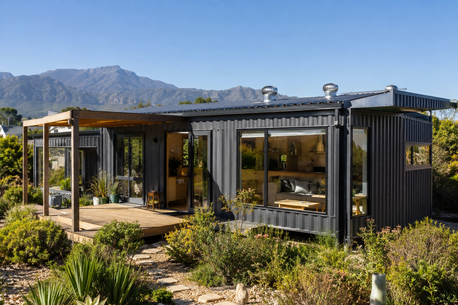
Whirlybird Ventilation for Office Containers

El Niño Summer 2026/27: How Whirlybirds Can Help Cape Town Homes and Workplaces
Cape Town residents and business owners should prepare for the possibility of a particularly hot summer.
El Niño is already present and strengthening. International forecasts indicate a greater than 90% chance of a very strong El Niño event during the 2026–27 season. The Western Cape Government has also warned that the province could experience higher air temperatures, periods of extreme heat, increased fire danger and additional pressure on water resources.
Although El Niño does not guarantee that every part of Cape Town will experience the same conditions, preparing homes and workplaces for excessive summer heat is a sensible step.
One practical and energy-efficient option is professional whirlybird roof ventilation.
Why Cape Town Roof Spaces Become So HotDuring summer, direct sunlight heats roof sheeting and roof tiles for several hours every day. This heat is transferred into the roof cavity, where hot air can become trapped.
Without adequate roof ventilation, the temperature inside the roof space can rise considerably. The accumulated heat can then radiate through the ceiling and contribute to uncomfortable indoor conditions.
This can affect:
How Does a Whirlybird Work?
A whirlybird is a wind-driven turbine roof ventilator installed near the higher section of a roof.
As the turbine turns, it helps extract trapped hot air from the roof space or upper section of a building. Cooler replacement air can then enter through suitable intake vents or openings.
Whirlybirds offer several practical advantages:
Whirlybird Ventilation for Cape Town Homes
Bedrooms, lounges and home offices situated directly beneath a poorly ventilated roof can become extremely uncomfortable during hot summer afternoons.
Installing correctly positioned whirlybirds can help remove some of the accumulated roof-space heat before it transfers into the home.
Effective roof ventilation can contribute to:
Whirlybirds for Workshops, Warehouses and FactoriesHeat naturally rises and can collect beneath the high roofs of workshops, warehouses and industrial buildings.
Machinery, lighting, vehicles and normal business operations can add even more heat. During an El Niño summer, this can create uncomfortable working conditions and place additional strain on existing cooling systems.
Professionally installed industrial roof ventilation can help extract high-level heat and support natural airflow through the building.
Potential benefits include:
Buildings containing hazardous fumes, chemicals, combustible dust or regulated industrial processes may require engineered mechanical extraction in addition to roof turbines.
Why Professional Whirlybird Installation Matters
A roof turbine is only effective when it is correctly selected, positioned and installed.
Incorrect installation can result in poor extraction, water leaks, unnecessary noise or damage to the roof covering.
Before recommending a system, a professional installer should consider:
Prepare Before the Peak Summer Heat
The best time to improve roof ventilation is before the hottest part of summer arrives.
Installing whirlybirds early allows your roof ventilation system to be ready when temperatures begin climbing. It also avoids waiting until heatwaves create a rush for ventilation and cooling services across Cape Town.
El Niño cannot be prevented, but trapped roof heat can be managed.
Have your home or workplace assessed by IR Installers and find out which whirlybird roof ventilation solution is appropriate for your property.
Request an assessment or quotation:
WhatsApp: 082 513 1022
Email: sales@twirlybirds.co.za
Website: www.twirlybirds.co.za
Frequently Asked Questions
Will a whirlybird cool my entire house?
A whirlybird is not an air conditioner. It helps extract trapped heat from the roof space, which may reduce the amount of heat transferring through the ceiling. Results depend on the roof, insulation, intake ventilation and installation design.
Do whirlybirds use electricity?
Standard wind-driven whirlybirds do not require an electrical motor, so there is no direct electricity cost for operating them.
How many whirlybirds does my property need?
The correct number depends on the roof area, roof-cavity volume, building use and available replacement-air openings. A site assessment is recommended before installation.
Cape Town residents and business owners should prepare for the possibility of a particularly hot summer.
El Niño is already present and strengthening. International forecasts indicate a greater than 90% chance of a very strong El Niño event during the 2026–27 season. The Western Cape Government has also warned that the province could experience higher air temperatures, periods of extreme heat, increased fire danger and additional pressure on water resources.
Although El Niño does not guarantee that every part of Cape Town will experience the same conditions, preparing homes and workplaces for excessive summer heat is a sensible step.
One practical and energy-efficient option is professional whirlybird roof ventilation.
Why Cape Town Roof Spaces Become So HotDuring summer, direct sunlight heats roof sheeting and roof tiles for several hours every day. This heat is transferred into the roof cavity, where hot air can become trapped.
Without adequate roof ventilation, the temperature inside the roof space can rise considerably. The accumulated heat can then radiate through the ceiling and contribute to uncomfortable indoor conditions.
This can affect:
- Houses, flats and townhouses
- Home offices and converted garages
- Workshops and factories
- Warehouses and storage facilities
- Retail premises and commercial buildings
How Does a Whirlybird Work?
A whirlybird is a wind-driven turbine roof ventilator installed near the higher section of a roof.
As the turbine turns, it helps extract trapped hot air from the roof space or upper section of a building. Cooler replacement air can then enter through suitable intake vents or openings.
Whirlybirds offer several practical advantages:
- They operate without an electrical motor.
- They have no ongoing electricity cost.
- They help release trapped hot air from the roof space.
- They provide ongoing passive ventilation when airflow conditions are suitable.
- They can help reduce stale air and moisture accumulation.
- They are suitable for many residential, commercial and industrial roofs.
Whirlybird Ventilation for Cape Town Homes
Bedrooms, lounges and home offices situated directly beneath a poorly ventilated roof can become extremely uncomfortable during hot summer afternoons.
Installing correctly positioned whirlybirds can help remove some of the accumulated roof-space heat before it transfers into the home.
Effective roof ventilation can contribute to:
- A more comfortable indoor environment
- Reduced roof-space heat accumulation
- Better airflow through the roof cavity
- Less reliance on fans and air conditioning
- Improved removal of moisture and condensation
- Protection of items stored in roof spaces
Whirlybirds for Workshops, Warehouses and FactoriesHeat naturally rises and can collect beneath the high roofs of workshops, warehouses and industrial buildings.
Machinery, lighting, vehicles and normal business operations can add even more heat. During an El Niño summer, this can create uncomfortable working conditions and place additional strain on existing cooling systems.
Professionally installed industrial roof ventilation can help extract high-level heat and support natural airflow through the building.
Potential benefits include:
- Improved comfort for employees and customers
- Removal of trapped hot air from high roof areas
- Reduced heat load on air-conditioning systems
- Better ventilation of workshops and storage areas
- No electrical running cost for wind-driven turbines
- A practical ventilation solution for larger roof areas
Buildings containing hazardous fumes, chemicals, combustible dust or regulated industrial processes may require engineered mechanical extraction in addition to roof turbines.
Why Professional Whirlybird Installation Matters
A roof turbine is only effective when it is correctly selected, positioned and installed.
Incorrect installation can result in poor extraction, water leaks, unnecessary noise or damage to the roof covering.
Before recommending a system, a professional installer should consider:
- The size and pitch of the roof
- Roofing material
- Roof-cavity volume
- Existing ventilation and insulation
- Suitable intake-air openings
- Prevailing wind exposure
- The number and size of turbines required
- Correct flashing and waterproofing
Prepare Before the Peak Summer Heat
The best time to improve roof ventilation is before the hottest part of summer arrives.
Installing whirlybirds early allows your roof ventilation system to be ready when temperatures begin climbing. It also avoids waiting until heatwaves create a rush for ventilation and cooling services across Cape Town.
El Niño cannot be prevented, but trapped roof heat can be managed.
Have your home or workplace assessed by IR Installers and find out which whirlybird roof ventilation solution is appropriate for your property.
Request an assessment or quotation:
WhatsApp: 082 513 1022
Email: sales@twirlybirds.co.za
Website: www.twirlybirds.co.za
Frequently Asked Questions
Will a whirlybird cool my entire house?
A whirlybird is not an air conditioner. It helps extract trapped heat from the roof space, which may reduce the amount of heat transferring through the ceiling. Results depend on the roof, insulation, intake ventilation and installation design.
Do whirlybirds use electricity?
Standard wind-driven whirlybirds do not require an electrical motor, so there is no direct electricity cost for operating them.
How many whirlybirds does my property need?
The correct number depends on the roof area, roof-cavity volume, building use and available replacement-air openings. A site assessment is recommended before installation.